jueves, 15 de marzo de 2012

Australia se apunta a la partida


Australia por su naturaleza no debería meterse en fregados, pero la verdad es que no ha parado. En todos los conflictos donde o los EEUU o UK hayan querido meterse Australia ha participado de una u ootra forma.
El discurso de Obama en el que menciona que la zona surasiática es una priordad actualmente, y el despliegue de tropas americanas en ese país no son meras coincidencias.

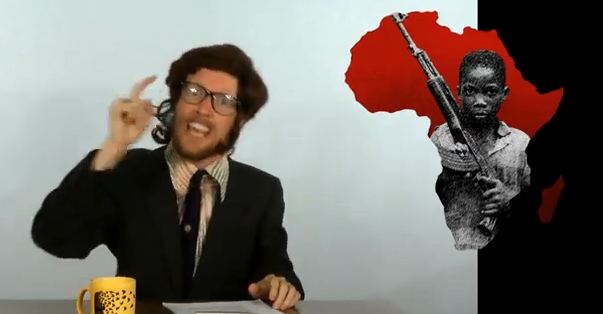
Más manipulación para intervenir en Uganda? (Kony2012)

Kony2012, tiene nombre de operación militar.
Pero está amparado en una ONG que nunca antes se había oido hablar de ella: "los niños invisibles".
Suena como a esas organizaciones unipersonales de derechos humanos que han surgido en Siria, pero afincadas en Inglaterra u otros países, cuyos fines no dejan de sorprender ( por decirlo de forma suave), y cuyos métodos e informes son casi la única fuente de la que bebe el mundo occidental.

Desde hace bastante tiempo, se está usando a la infancia, como medio de presión al público. Quién va a ser insensible a que los niños sufran? No te puedes negar. Si te niegas es que eres un monstruo, por lo tanto, ahí está el hueco para sembrar propaganda para todos los públicos.
Alguien se acuerda de la famosas incubadoras de Kuwait, cuando entraron los irakíes?
Luego quedó muy claro cómo se manipuló y con qué fin.
Hace más de 40 años, una foto de una niña vietnamita desnuda huyendo de los bombardeos dio la vuelta al mundo y removió consciencias en todas partes.
Los americanos dicen que por eso perdieron la guerra: porque se informó de una forma independiente e impactante.
Antes existía gente independiente, y se publicaba. Ahora NO.

Kony 2012, no deja de ser propaganda barata, muy bien hecha eso sí, con todos los medios técnicos y audiovisuales para que el mensaje cale.
Tanto que ya es viral.
Que cada uno se componga la obra como quiera. Demasiados frentes se están abriendo. La cuestión es ¿porqué?


*
*
*
*

ON THE KONY VIDEO:

- Again lost in this frenzy is what the actual people of Uganda think about the video.
– Dr Beatrice Mpora, director of Kairos, a community health organisation in Gulu, a town that was once the centre of the rebels’ activities.

“What that video says is totally wrong, and it can cause us more problems than help us. There has not been a single soul from the LRA here since 2006. Now we have peace, people are back in their homes, they are planting their fields, they are starting their businesses. That is what people should help us with.”

- Javie Ssozi, an influential Ugandan blogger.

“Suggesting that the answer is more military action is just wrong. Have they thought of the consequences? Making Kony ‘famous’ could make him stronger. Arguing for more US troops could make him scared, and make him abduct more children, or go on the offensive.”

- Rosebell Kagumire, a Ugandan journalist specialising in peace and conflict reporting.

This paints a picture of Uganda six or seven years ago, that is totally not how it is today. It’s highly irresponsible”.

 http://www.independent.ie/world-news/africa/joseph-kony-2012-viral-movie-watched-by-55-million-in-four-days-praised-by-obama-3045148.html


There’s a rather skeptical view from this BBC correspondent, which raises similar points to this thread.
Joseph Kony campaign under fire

The extraordinarily sudden success, if that is the right word, of the social media campaign by three American advocacy groups aimed at shining a big spotlight on the notorious Ugandan rebel leader Joseph Kony has prompted some scathing reactions from plenty of well-informed quarters. …

The Youtube link to the video in question “Kony 2012″ from the NGO “Invisible Children” (38 Million views in 2 days ):
http://www.youtube.com/watch?v=Y4MnpzG5Sqc


Saw the story/video earlier in the Guardian. It is interesting that after Obama ordered 100 JSOC troops to go after Kony that 3 months later this video appears and goes viral instantly. Some more of this “Soft Power” approach to US objectives? Some quotes from one of the Guardian stories:

Foreign Affairs magazine has accused the organization of “manipulat[ing] facts for strategic purposes.” Charity Navigator has given Invisible Children a two-star rating in accountability out of a possible four.

Also

Critics point out that the campaign calls on the public to pressure the US to continue working with the Ugandan military, an organisation that has its own record of abuses. “The Ugandan army continues to commit politically motivated abuses in Uganda,” Maria Burnett, senior researcher with Human Rights Watch, Africa Division, told the Guardian.

“We have documented numerous cases in which they’ve been involved in torture and arbitrary arrests, as well as a score of killings of unarmed protesters and bystanders during political demonstrations in the past three years.”
 http://www.guardian.co.uk/world/us-news-blog/2012/mar/07/kony-2012-video-viral-invisible-children?intcmp=239

Of course this sudden interest in Kony (after 20 years of the LRA operating with impunity) has nothing to do with 2-6 Billion barrels of oil discovered in the Lake Albert basin in 2006. Production was set to begin in 2013 on the field but due to it being close to Kony’s stronghold it was pushed back to 2015. Did I mention that the Albert basin’s oil is owned through a Production Sharing Agreement (PSA) by British oil company Tullow Oil and US firm ExxonMobil? Also if you have the time read some Wikileaks cables on Uganda corruption and ExxonMobil.

 http://www.cablegatesearch.net/cable.php?id=10KAMPALA19&q=corruption%20uganda


The Kony video is a fraud…we know it is simply because so many people have seen it or been made to. When real truth videos have troube racking up their first million, this one seems to have been gifted a superhighway into the hearts of the voting public

Not eveyone has been fooled though
http://northerntruthseeker.blogspot.com.au/2012/03/stop-joseph-kony-push-is-fraud.html
http://lonestarwatchdog.blogspot.com.au/2012/03/i-do-not-buy-kony-scam-parants-beware.html


lunes, 12 de marzo de 2012

Danny el sirio: más propaganda de la CNN

Putin enloquece a Washington


Pepe Escobar

Olvidad el pasado (Sadam, Osama, Gadafi) y el presente (Assad, Ahmadineyad). Se puede apostar una botella de Pétrus 1989 (el problema es la espera de seis años para recibirla) por el futuro previsible; el máximo espíritu diabólico de Washington –y de sus socios delincuentes de la OTAN y sus diversos socios de los medios de comunicación– no será otro que el presidente ruso Vladimir Putin, de regreso al futuro.

Y que no quepa la menor duda: a Vlad Putin le encantará. Ha vuelto exactamente adonde quiere estar: comandante en jefe de Rusia a cargo de las fuerzas armadas, la política exterior y todos los asuntos de seguridad nacional.

Las elites angloestadounidenses todavía se retuercen ante la mención de su legendario discurso de 2007 en Múnich cuando criticó al gobierno de George W Bush por su agenda imperial obsesivamente unipolar “mediante un sistema que no tiene nada que ver con la democracia” y su continua violación de las “fronteras nacionales en casi todas partes”.

Por lo tanto Washington y sus acólitos ya están avisados. Antes de la elección del pasado domingo, Putin incluso publicó su hoja de ruta. Lo esencial: no a la guerra en Siria; no a la guerra en Irán; no a los “bombardeos humanitarios” ni a las “revoluciones de color”, todo integrado en un nuevo concepto: “instrumentos ilegales de poder blando”. Para Putin el Nuevo Orden Mundial diseñado por Washington no tiene futuro. Lo que vale es “el principio consagrado de la soberanía de los Estados”.

No es sorprendente. Cuando Putin considera Libia ve las consecuencias gráficas, regresivas, de la “liberación” por parte de la OTAN mediante “bombardeos humanitarios”: un país fragmentado, controlado por milicias vinculadas a al Qaida; la atrasada Cirenaica separándose de la más desarrollada Tripolitania; y un pariente del último rey llevado para gobernar el nuevo “emirato”, para delicia de esos demócratas modélicos de la Casa de Saud.

Más elementos esenciales: no a las bases que rodean a Rusia; no a la defensa de misiles sin una admisión explícita y por escrito de que el sistema nunca tendrá a Rusia como objetivo; y una creciente cooperación con el grupo BRICS de las potencias emergentes.

En su mayor parte esto ya estaba implícito en la anterior hoja de ruta de Putin, su documento “Un nuevo proyecto de integración para Eurasia: el futuro en gestación”. Fue el ippon de Putin –adora el judo– contra la OTAN, el Fondo Monetario Internacional y el neoliberalismo de la línea dura. Ve una Unión Eurasiática como “unión económica y monetaria moderna” que se extienda por toda Asia Central.

Para Putin, Siria es un detalle importante (no solo por la base naval rusa en el puerto mediterráneo de Tartus que a la OTAN le encantaría eliminar). Pero el meollo del asunto es la integración de Eurasia. Los atlantistas enloquecerán en masa cuando invierta todos sus esfuerzos en la coordinación de “una poderosa unión supranacional que puede convertirse en uno de los polos del mundo actual y un eficiente vínculo entre Europa y la dinámica región Asia-Pacífico”.

La hoja de ruta opuesta será la doctrina Pacífico de Obama y Hillary. ¿Hasta qué punto es excitante el asunto?


Putin apuesta por el Ductistán

Putin encabezó casi en solitario la resurrección de Rusia como mega-superpotencia energética (el petróleo y el gas representan dos tercios de las exportaciones de Rusia, la mitad del presupuesto federal y un 20% del producto interno bruto). Por lo tanto hay que contar con que el Ductistán siga siendo clave.

Y estará centrado sobre todo en el gas; aunque Rusia representa al menos un 30% de los suministros globales de gas, su producción de gas natural líquido (GNL) es menos de un 5% del mercado global. Ni siquiera es uno de los diez productores principales.

Putin sabe que Rusia necesitaría mucha inversión extranjera en el Ártico –de Occidente y sobre todo de Asia– para mantener su producción de petróleo de más de 10 millones de barriles diarios. Y necesita llegar a un complejo y exhaustivo acuerdo de billones de dólares con China centrado en los yacimientos de gas de Siberia Oriental; el ángulo petrolero ya se ha cubierto mediante el oleoducto ESPO (siglas en inglés de Siberia Oriental-Océano Pacífico). Putin sabe que para China –en términos de asegurar la energía– este acuerdo es un contragolpe vital contra el tenebroso “pivoteo” de Washington hacia Asia.

Putin también hará todo por consolidar el oleoducto South Stream, que puede acabar costando 22.000 millones de dólares (el acuerdo de los accionistas ya se ha firmado entre Rusia, Alemania, Francia e Italia. South Stream es gas ruso entregado bajo el Mar Negro a la parte sur de la UE, a través de Bulgaria, Serbia, Hungría y Eslovaquia). Si South Stream tiene éxito, el oleoducto rival, Nabucco, estará jaque mate; una importante victoria rusa contra la presión de Washington y los burócratas de Bruselas.

Todavía está todo en juego en la intersección crucial de la geopolítica dura y el Ductistán. Una vez más Putin enfrentará otra hoja de ruta de Washington, la no exactamente exitosa Nueva Ruta de la Seda. (Vea US's post-2014 Afghan agenda falters, Asia Times Online, 4 de noviembre de 2011.)

Y luego tenemos la gran incógnita, la Organización de Cooperación de Shanghái (SCO). Putin querrá que Pakistán sea miembro pleno, tal como China está interesada en incorporar a Irán. Las repercusiones serían trascendentales, como si Rusia, China, Pakistán e Irán coordinaran no solo su integración económica sino también su seguridad mutua dentro de una SCO fortalecida, cuyo lema es “no-alineamiento, no-confrontación y no-interferencia en los asuntos de otros países”.

Putin ve que con el control por parte de Rusia, Asia Central e Irán de al menos el 50% de las reservas de gas del mundo, y con Irán y Pakistán como virtuales miembros de la SCO, el nombre del juego se convierte en integración de Asia, si no de Eurasia. La SCO se desarrolla como una fuerza motriz económica y de seguridad mientras, paralelamente, elDuctistán acelera la integración plena de la SCO como un contragolpe para la OTAN. Los propios protagonistas regionales decidirán qué tiene más sentido – esto o una Nueva Ruta de la Seda inventada en Washington.

Que no quepan dudas. Tras la interminable satanización de Putin y la miríada de intentos de deslegitimar las elecciones presidenciales de Rusia, se encuentran algunos sectores muy encolerizados y poderosos de las elites de Washington y angloestadounidenses.

Saben que Putin será un negociador ultra duro en todos los frentes. Saben que Moscú aplicará una coordinación cada vez más estrecha con China: en la frustración de bases permanentes de la OTAN en Afganistán; en el apoyo a la autonomía estratégica de Pakistán; en la oposición a la defensa de misiles; en garantizar que no se ataque a Irán.

Será el demonio predilecto porque no podría haber un oponente más formidable a los planes de Washington en el escenario mundial, se llamen Gran Medio Oriente, Nueva Ruta de la Seda, Dominación de Espectro Completo o Siglo Pacífico de EE.UU. Señoras y señores, preparémonos para el estruendo.

domingo, 11 de marzo de 2012

Engaño con alta tecnología

What was surely meant to be a clever display of media-friendly visuals to illustrate Syrian regime violence in Homs, has instead raised more questions than answers.

US State Department satellite images of the embattled city were posted on Facebook last Friday by US Ambassador to Syria Robert Ford, who complains: “A terrible and tragic development in Syria is the use of heavy weaponry by the Assad regime against residential neighborhoods.”

The “satellite photos,” says Ford, “have captured both the carnage and those causing it – the artillery is clearly there, it is clearly bombing entire neighborhoods…We are intent on exposing the regime's brutal tactics for the world to see.”

But within 24 hours, the blog Moon of Alabama had taken a hammer to the ambassador’s claims. A detailed examination of satellite imagery by the bloggers revealed numerous discrepancies in Washington’s allegations. Mainly, their investigations point to the fact that Ford’s satellite images were “of guns training within military barracks or well known training areas and not in active deployment.”

Moon of Alabama posts its own satellite images, graphics and diagrams to bolster its argument – and these are well worth a look.

The US envoy’s questionable claims don’t stop at satellite images, however. In his Facebook post, Ford insists: “There is no evidence that the opposition – even those opposition members who have defected from the military – has access to or has employed such heavy weapons." By this, he means the “artillery” used “to pound civilian apartment buildings and homes from a distance.”

Then why is there satellite photo evidence of destruction in pro-regime Alawi areas?

Fast-forward to CNN’s very own Jonathan King, who broadcast satellite images of Homs on February 9, the day before the State Department loaded their photos on the web. King’s images of Homs are dated February 5, two days after violence erupted in the city, focusing heavily in the Baba Amr neighborhood where opposition gunmen are allegedly present:


King’s presentation of “shelling, fires and damage” to Homs shows destruction of property consistent with the use of heavy weapons: “It’s like a ghost town – with no cars at all, there’s damage in the roads and so much damage on the top of the buildings.”

Zooming in on three different sections of the same Homs neighborhood to show before-and-after images of the destruction, King says: “Now obviously, we’re not there, but this powerful satellite imagery tends to support the accounts from activists that there’s a lot of shelling and fighting going on in the city, and a lot of fires.”

There is only one problem with his account. Most of the alleged fighting, shelling, destruction and killing reported widely in the international media took place in the Baba Amr neighborhood of Homs, southwest of the city, and an anti-regime stronghold.

But all three satellite images shown by King are in al-Zahraneighborhood, a pro-regime area consisting mainly of Alawis, who belong to the same Muslim minority sect as Syrian President Bashar al-Assad.

That is a stunning revelation. Pro-regime civilians in Homs and other Syrian areas have complained of attacks, kidnappings and killings by armed opposition groups for months now, with little attention received by foreign media.

And it completely undermines Ford’s contention that: “There is no evidence that the opposition…has access to or has employed such heavy weapons. “

Let’s look at some screenshots from CNN’s presentation and compare it to screenshots taken from Google Maps. The first visual is of King pointing to the three highlighted areas of destruction in Homs:


CNN’s satellite images have been turned 90 degrees clockwise in their own presentation of the photos, so in this next screenshot, we have shifted their visuals so that they are north facing – to help with comparison to our pictures in a normal north-south format. This will also make things easier for those readers compelled to rush out and conduct their own web search on the area.


Zooming into one highlighted area of destruction, you can see that the two photos – CNN’s and ours – are an exact match. To the north of the horizontal road is a lot marked by a large tree to its left. South of that same road, buildings are positioned at a distinct diagonal angle. This area is inside Homs’ al-Zahra neighborhood.


This next screenshot zooms out so that you can see the placement of CNN’s three areas of damage – all clearly within al-Zahra, which is marked by a red circle. In the bottom left hand corner of the shot is a circular area that we included as a marker to help readers distinguish al-Zahra’s location in proximity to other areas in Homs. This is where the Citadel of Homs is located.


The final screenshot is of Homs from a distance so that it is possible to view the distance between Baba Amr (circled in blue) to the left of the picture, and al-Zahra, to the right. The Citadel in the previous shot is between the two neighborhoods.


An image is no longer worth a thousand words

Photos and video footage showing scenes of violence have been streaming out of Homs since reports of heavy fighting first broke on February 3. It is hard to glean much from these because there is not enough information in the visuals to confirm the source of gunfire or shelling. The satellite images posted by the State Department on February 6 – according to the Moon of Alabama blog – do not actually show the Syrian army engaged in battle, as suggested by Ambassador Ford when he claims:

“Satellite photos have captured both the carnage and those causing it – the artillery is clearly there, it is clearly bombing entire neighborhoods.”

But his statement about armed opposition groups not having the weaponry to fight from afar is now questionable given the CNN shots of damaged buildings and “burn craters” in the road – yet even this is not conclusive.

If you don’t believe an image any longer, what do you do about this kind of allegation by Ford? One of the few videos I find credible – and that, only because in it we see the death of an actual “known” person that has not been contested – is this footage of Gilles Jacquier (warning: graphic images contained), the France 2 cameraman killed while participating in a government-sponsored tour of Homs. Jacquier was killed in the pro-regime neighborhood of Akrama, home mainly to a mix of Alawis and Christians who originally migrated from rural areas. Pro-opposition journalist Omar Idilbi had once dubbed this area “the castle of the regime.”

When allegations flew left and right about the source of the projectile that killed Jacquier and reportedly eight others that day, the Arab League monitors on the ground in Syria investigated and concluded: “mission reports from Homs indicate that the French journalist was killed by opposition mortar shells.”

Syria has destroyed for me all faith in the images I once trusted. People on both sides of this conflict are manipulating visual media to propagandize toward their political goals. The problem with this is that many genuine documented stories are now disregarded because of the skepticism of readers like myself.

Governments and media should be taken to task for their complicity in the dissemination of false information. There are lives at stake, after all – the very lives that fuel their pitiful “outrage.”

Many thanks to Adel Alsalman for the screenshots in this blog

Sharmine Narwani is a commentary writer and political analyst covering the Middle East. You can follow her on twitter @snarwani

sábado, 10 de marzo de 2012

Guerra o Paz

Cuestionando el listado de víctimas de Siria

“Perception is 100 percent of politics,” the old adage goes. Say something three, five, seven times, and you start to believe it in the same way you “know” aspirin is good for the heart.

Sometimes though, perception is a dangerous thing. In the dirty game of politics, it is the perception – not the facts of an issue – that invariably wins the day.

In the case of the raging conflict over Syria, the one fundamental issue that motors the entire international debate on the crisis is the death toll and its corollary: the Syrian casualty list.

The “list” has become widely recognized – if not specifically, then certainly when the numbers are bandied about: 4,000, 5,000, 6,000 – sometimes more. These are not mere numbers; they represent dead Syrians.

But this is where the dangers of perception begin. There are many competing Syrian casualty lists with different counts – how does one, for instance gauge if X is an accurate number of deaths? How have the deaths been verified? Who verifies them and do they have a vested interest? Are the dead all civilians? Are they pro-regime or anti-regime civilians? Do these lists include the approximately 2,000 dead Syrian security forces? Do they include members of armed groups? How does the list-aggregator tell the difference between a civilian and a plain-clothes militia member?

Even the logistics baffle. How do they make accurate counts across Syria every single day? A member of the Lebanese fact-finding team investigating the 15 May 2011 shooting deaths of Palestinian protesters by Israelis at the Lebanese border told me that it took them three weeks to discover there were only six fatalities, and not the 11 counted on the day of the incident. And in that case, the entire confrontation lasted a mere few hours.

How then does one count 20, 40, or 200 casualties in a few hours while conflict continues to rage around them?

My first port of call in trying to answer these questions about the casualty list was the United Nations Office of the High Commissioner for Human Rights (OHCHR), which seemed likely to be the most reliable source of information on the Syrian death toll – until it stopped keeping track last month.

The UN began its effort to provide a Syrian casualty count in September 2011, based primarily on lists provided by five different sources. Three of their sources were named: The Violations Documenting Center (VDC), the Syrian Observatory for Human Rights (SOHR) and the Syrian Shuhada website. At that time, the lists varied in number from around 2,400 to 3,800 victims.

The non-UN casualty list most frequently quoted in the general media is the one from the Syrian Observatory – or SOHR.

Last month, SOHR made some headlines of its own when news of a rift over political viewpoints and body counts erupted. Two competing SOHRs claimed authenticity, but the group headed by Rami Abdul Rahman is the one recognized by Amnesty International.

OHCHR spokesman Rupert Colville stated during a phone interview that the UN evaluates its sources to check “whether they are reliable,” but appeared to create distance from SOHR later – during the group’s public spat – by saying: “The (UN) colleague most involved with the lists…had no direct contact with the Syrian Observatory, though we did look at their numbers. This was not a group we had any prior knowledge of, and it was not based in the region, so we were somewhat wary of it.”

Colville explains that the UN sought at all times “to make cautious estimates” and that “we have reasonable confidence that the rounded figures are not far off.”

While “also getting evidence from victims and defectors – some who corroborated specific names,” the UN, says Colville, “is not in a position to cross-check names and will never be in a position to do that.”

I spoke to him again after the UN decided to halt its casualty count in late January. “It was never easy to verify, but it was a little bit clearer before. The composition of the conflict has changed. It’s become much more complex, fragmented,” Colville says. “While we have no doubt there are civilian and military casualties…we can’t really quantify it.”

“The lists are clear – the question is whether we can fully endorse their accuracy,” he explains, citing the “higher numbers” as an obstacle to verification.

The Casualty Lists Up Close: Some Stories Behind the Numbers

Because the UN has stopped its casualty count, reporters have started reverting back to their original Syrian death toll sources. The SOHR is still the most prominent among them.

Abdul Rahman’s SOHR does not make its list available to the general public, but in early February I found a link to a list on the other SOHR website and decided to take a look. The database lists the victim’s name, age, gender, city, province, and date of death – when available. In December 2011, for instance, the list names around 77 registered casualties with no identifying information provided. In total, there are around 260 unknowns on the list.

Around that time, I had come across my first list of Syrians killed in the crisis, reportedly compiled in coordination with the SOHR, that contained the names of Palestinian refugees killed by Israeli fire on the Golan Heights on 15 May 2011 and 5 June 2011 when protesters congregated on Syria’s armistice line with Israel. So my first check was to see if that kind of glaring error appears in the SOHR list I investigate in this piece.

To my amazement, the entire list of victims from those two days were included in the SOHR casualty count – four from May 15 (#5160 to #5163) and 25 victims of Israeli fire from June 5 (#4629 to #4653). The list even identifies the deaths as taking place in Quneitra, which is in the Golan Heights.

It also didn’t take long to find the names of well-publicized pro-regime Syrians on the SOHR list and match them with YouTube footage of their funerals. The reason behind searching for funeral links is that pro-regime and anti-regime funerals differ quite starkly in the slogans they chant and the posters/signs/flags on display. Below, is a list of eight of these individuals, including their number, name, date and place of death on the casualty list – followed by our video link and further details if available:

#5939, Mohammad Abdo Khadour, 4/19/11, Hama, off-duty Colonel in Syrian army, shot in his car and died from multiple bullet wounds.Funeral link.

#5941, Iyad Harfoush, 4-18-11, Homs, off-duty Commander in Syrian army. In a video, his wife says someone started shooting in the mostly pro-regime al Zahra neighborhood of Homs – Harfoush went out to investigate the incident and was killed. Funeral link.

#5969, Abdo al Tallawi, 4/17/11, Homs, General in Syrian army killed alongside his two sons and a nephew. Funeral footage shows all four victims. The others are also on the list at #5948, Ahmad al Tallawi, #5958, Khader al Tallawi and #5972, Ali al Tallawi, all in Homs, Funeral link.

#6021, Nidal Janoud, 11/4/11, Tartous, an Alawite who was severely slashed by his assailants. The bearded gentleman to the right of the photo, and a second suspect, are now standing trial for the murder.Photo link.

#6022, Yasar Qash’ur, 11/4/11, Tartous, Lieutenant Colonel in the Syrian army, killed alongside 8 others in an ambush on a bus in Banyas,Funeral link.

#6129, Hassan al-Ma’ala, 4/5/11, policeman, suburbs of Damascus,Funeral link.

#6130, Hamid al Khateeb, 4/5/11, policeman, suburbs of Damascus,Funeral link.

#6044, Waeb Issa, 10/4/11, Tartous, Colonel in Syrian army, Funeral link.

Besides featuring on the SOHR list, Lt. Col. Yasar Qashur, Iyad Harfoush, Mohammad Abdo Khadour and General Abdo al Tallawi and his two sons and nephew also appear on two of the other casualty lists – the VDC and Syrian Shuhada – both used by the United Nations to compile their numbers.

Nir Rosen, an American journalist who spent several months insides Syria’s hot spots in 2011, with notable access to armed opposition groups, reported in a recent Al Jazeera interview:


“Every day the opposition gives a death toll, usually without any explanation of the cause of the deaths. Many of those reported killed are in fact dead opposition fighters, but the cause of their death is hidden and they are described in reports as innocent civilians killed by security forces, as if they were all merely protesting or sitting in their homes. Of course, those deaths still happen regularly as well.”

“And, every day, members of the Syrian army, security agencies and the vague paramilitary and militia phenomenon known as shabiha ["thugs"] are also killed by anti-regime fighters,” Rosen continues.

The report issued in January by Arab League Monitors after their month-long observer mission in Syria – widely ignored by the international media – also witnessed acts of violence by armed opposition groups against both civilians and security forces.

The Report states: “In Homs, Idlib and Hama, the observer mission witnessed acts of violence being committed against government forces and civilians…Examples of those acts include the bombing of a civilian bus, killing eight persons and injuring others, including women and children…In another incident in Homs, a police bus was blown up, killing two police officers.” The observers also point out that “some of the armed groups were using flares and armour-piercing projectiles.“

Importantly, the report further confirms obfuscation of casualty information when it states: “the media exaggerated the nature of the incidents and the number of persons killed in incidents and protests in certain towns.”

On February 3, the eve of the UN Security Council vote on Syria, news broke out that a massacre was taking place in Homs, with the general media assuming it was true and that all violence was being committed by the Syrian government. The SOHR’s Rami Abdul Rahman was widely quoted in the media as claiming the death toll to be at 217. The Local Coordination Committees (LCCs), which provide information to the VDC, called it at “more than 200,” and the Syrian National Council (SNC), a self-styled government in absentia of mainly expats, claimed 260 victims.

The next day, the casualty count had been revised down to 55 by the LCCs. (link: http://www.bbc.co.uk/news/world-middle-east-16883911)

Even if the count is at 55 – that is still a large number of victims by any measure. But were these deaths caused by the Syrian government, by opposition gunmen or in the crossfire between the two groups? That is still the question that needs to break through the deafening narratives, lists, and body counts.

In International Law, Detail Counts

While the overwhelming perception of Syrian casualties thus far has been that they are primarily unarmed civilians deliberately targeted by government forces, it has become obvious these casualties are also likely to include: Civilians caught in the crossfire between government forces and opposition gunmen; victims of deliberate violence by armed groups; “dead opposition fighters” whose attire do not distinguish them from regular civilians; and members of the Syrian security forces, both on and off duty.

Even if we could verify the names and numbers on a Syrian casualty list, we still don’t know their stories, which if revealed, may pose an entirely different picture of what is going on in Syria today

These questions are vitally important to understand the burden of responsibility in this conflict. International law provides for different measures of conflict: the two most frequently used gauges for this are the Principle of Necessity, i.e., using force only when it is necessary, and the Principle of Proportionality, i.e., the use of force proportional to the threat posed.

In the case of Syria – like in Bahrain, Yemen, Egypt and Libya – it is widely believed that the government used unnecessary force in the first instance. Syrian President Bashar Assad, like many of these Arab rulers, has as much as admitted to “mistakes” in the first months of protests. These mistakes include some shooting deaths and detaining a much larger number of protesters than expected, some of whom were allegedly tortured.

Let us assume, without question, that the Syrian government was over zealous in its use of force initially, and therefore violated the Principle of Necessity. I tend to believe this version because it has been so-stated by the Arab League’s observer mission – the first and only boots-on-the-ground monitors investigating the crisis from within the country.

However – and this is where the casualty lists come in – there is not yet nearly enough evidence, not by any measure acceptable in a court of law, that the Syrian government has violated the Principle of Proportionality. Claims that the regime has used disproportionate force in dealing with the crisis are, today, difficult to ascertain, in large part because opponents have been using weapons against security forces and pro-regime civilians almost since the onset of protests.

Assuming that the number of casualties provided by the UN’s OHCHR is around the 5,000-mark -the last official figure provided by the group – the question is whether this is a highly disproportionate number of deaths when contrasted directly with the approximately 2,000 soldiers of the regular Syrian army and other security forces who have been reportedly killed since April 2011.

When you calculate the deaths of the government forces in the past 11 months, they amount to about six a day. Contrast that with frequent death toll totals of around 15+ each day disseminated by activists – many of whom are potentially neither civilian casualties nor victims of targeted violence – and there is close to enough parity to suggest a conflict where the acts of violence may be somewhat equal on both sides.

Last Sunday, as Syrians went to the polls to vote on a constitutional referendum, Reuters reports – quoting the SOHR – that 9 civilians and 4 soldiers were killed in Homs, and that elsewhere in Syria there were 8 civilian and 10 security forces casualties. That is 17 civilians and 14 regime forces – where are the opposition gunmen in that number? Were none killed? Or are they embedded in the “civilian” count?

Defectors or Regular Soldiers?

There have also been allegations that many, if not most, of the soldiers killed in clashes or attacks have been defectors shot by other members of the regular army. There is very little evidence to support this as anything more than a limited phenomenon. Logically, it would be near impossible for the Syrian army to stay intact if it was turning on its rank-and-file soldiers in this manner – and the armed forces have remained remarkably cohesive given the length and intensity of the conflict in Syria.

In addition, the names, rank and cities of each of the dead soldiers are widely publicized by state-owned media each day, often accompanied by televised funerals. It would be fairly simple for the organized opposition to single out by name the defectors they include on their casualty lists, which has not happened.

The very first incident of casualties from the Syrian regular army that I could verify dates to 10 April 2011, when gunmen shot up a bus of soldiers travelling through Banyas, in Tartous, killing nine. This incident took place a mere few weeks after the first peaceful protests broke out in Syria, and so traces violence against government forces back to the start of political upheaval in the country.

“Witnesses” quoted by the BBC, Al Jazeera and The Guardian insisted that the nine dead soldiers were “defectors” who had been shot by the Syrian army for refusing orders to shoot at demonstrators.

Joshua Landis, director of the Center for Middle East Studies at the University of Oklahoma, debunked that version on his Syria Comment website. Another surviving soldier on the bus – a relation of Lt. Col. Yasar Qashur, #6022 on the SOHR list, whose funeral I link to above – denied that they were defectors too. But the narrative that dead soldiers are mostly defectors shot by their own troops has stuck throughout this conflict – though less so, as evidence of gunmen targeting Syrian forces and pro-regime civilians becomes belatedly apparent.

The VDC – another of the UN’s OHCHR sources for casualty counts – alleges that 6,399 civilians and 1,680 army defectors were killed in Syria during the period from 15 March 2011 to 15 February 2012. All security forces killed in Syria during the past 11 months were “defectors?” Not a single soldier, policeman or intelligence official was killed in Syria except those forces who opposed the regime? This is the kind of mindless narrative of this conflict that continues unchecked. Worse yet, this exact VDC statistic is included in the latest UN report on Syria issued last week.

Humanitarian Crisis or Just Plain Violence?

While few doubt the Syrian government’s violent suppression of this revolt, it is increasingly clear that in addition to the issue of disproportionally, there is the question of whether there is a “humanitarian crisis” as suggested by some western and Arab leaders since last year. I sought some answers during a trip to Damascus in early January 2012 where I spoke to a select few NGOs that enjoyed rare access to all parts of the country.

Given that words like “massacre” and “slaughter” and “humanitarian crisis” are being used in reference to Syria, I asked International Committee of the Red Cross (ICRC) Spokesman Saleh Dabbakeh how many calls for urgent medical assistance his organization had received in 2011. His response was shocking. “Only one that I recall,” said Dabbakeh. Where was that, I asked? “Quneitra National Hospital in the Golan,” he replied, “last June.” This was when Israeli troops fired on Syrian and Palestinian protesters marching to the 1973 armistice line with the Jewish state. Those same protesters that ended up on SOHR’s casualty list.

A Syrian Arab Red Crescent (SARC) worker confirmed that, recalling that his organization treated hundreds of casualties from the highly-publicized incident.

As the level of violence has escalated, however, the situation has deteriorated, and the ICRC now has received more calls for medical assistance – mainly from private hospitals in Homs. The SARC today has nine different points in Homs where it provides such assistance. The only two places they do not currently serve are the neighborhoods of Baba Amr and Inshaat “because the security situation does not allow for it – for their own safety, there is fighting there.”

During a phone call last Thursday, one NGO officer, explained that the measure for a “humanitarian crisis” is in level of access to basic staples, services and medical care. He told me off the record that “There is a humanitarian crisis in (i.e.) Baba Amr today, but not in Syria. If the fighting finishes tomorrow, there will be enough food and medical supplies.”

“Syria has enough food to feed itself for a long time. The medical sector still functions very well. There isn’t enough pressure on the medical sector to create a crisis,” he elaborated. “A humanitarian crisis is when a large number of a given population does not have access to medical aid, food, water, electricity, etc – when the system cannot any longer respond to the needs of the population.”

But an international human rights worker also cautions: “the killing is happening on both sides – the other side is no better.”

People have to stop this knee-jerk, opportunistic, hysterical obsession with numbers of dead Syrians, and ask instead: “who are these people and who killed them?” That is the very least these victims deserve. Anything less would render their tragic deaths utterly meaningless. Lack of transparency along the supply-chain of information and its dissemination – on both sides – is tantamount to making the Syrian story all about perception, and not facts. It is a hollow achievement and people will die in ever greater numbers.

Sharmine Narwani is a commentary writer and political analyst covering the Middle East. You can follow Sharmine on twitter@snarwani.

Las condonaciones de préstamos a partidos

Gaspar Ariño Ortiz - 05/02/2010

La prensa reciente nos da noticia de la condonación de deuda que el Banco de Santander y la BBK hicieron al PSOE en el ejercicio de 2006, por un importe, entre ambos, de 30 millones de euros. Esta condonación se suma a la de 7,1 millones que la Caixa hizo al Partido de los Socialistas de Cataluña en 2004 y que fue igualmente objeto de denuncia pública. Viejo tema éste que en España se ha repetido desde los comienzos mismos de la transición. Recordemos la “deuda histórica” acumulada en los primeros años de la democracia por UCD, por AP, por la que fue “Operación Roca” o del desaparecido CDS, de cuya liquidación nunca se supo.

Esta deuda histórica se cifró en algún momento en 23.000 millones de las antiguas pesetas. El Banco de España dio alguna vez la cifra de 50.000 millones de pesetas (300 millones de euros), que fue el coste total de poner en marcha una democracia de partidos. Bien gastados están. Pero han pasado más de treinta años y al parecer seguimos igual. Los bancos y cajas se ven más o menos obligados a otorgar los préstamos que los partidos les piden -¿qué remedio?- y se encuentran luego con grandes dificultades para cobrarlos. Cuando los impagos, que hasta hace poco eran secretos, llegan a la opinión pública por alguna extraña vía, los bancos se limitan a decir que “la deuda está viva” (aunque haya sido provisionada al 100 por 100).

Las pólizas se aparcan, no se renuncia a cobrarlas, pero tampoco se ejecutan; se dejan dormir durante años, los intereses crecen pero se ignoran, hasta que llega un momento en que se “renegocian”, es decir, se cancelan total o parcialmente y es más fácil para todos borrarlas discretamente (si el Tribunal de Cuentas pregunta no se le dan demasiadas explicaciones). La cosa se presenta como acuerdos expresos o tácitos de renegociación según “los usos y costumbres del tráfico mercantil” (dice el partido) y de un “modo” satisfactorio para el banco y sus accionistas (dice el banco). Y a otra cosa, mariposa. Aunque naturalmente, habría que preguntarse: ¿qué beneficios obtiene el banco o la Caja de esa partida de recursos?, ¿consigue algo a cambio? Silencio.

Esta materia de préstamos y condonaciones de las entidades de crédito a los partidos era hasta el 2007 alegal (no había regulación sobre ella) y, como digo, secreta. Ni los bancos ni las Cajas tenían la obligación de declararlos. Eran los propios partidos quienes informaban a medias de su situación al Tribunal de Cuentas, el cual se quejaba siempre -como ahora- pero tenía escasos poderes de investigación y/o comprobación. Se limitaba a constatar datos y comportamientos respecto de los que nada podía hacer.

Pero la Ley de Transparencia de 2004 impuso a las Cajas (no a los Bancos) la obligación de hacer públicos los préstamos otorgados a los partidos, saliendo a la luz que los saldos vivos de los concedidos eran en los últimos años los siguientes:

- A finales de 2004: 80 millones de euros.

- A finales de 2005: 70.2 millones de euros.

- En el año 2006: 98,8 millones de euros.

- Y en el año 2007: 122,8 millones de euros.

Parece que la contracción del crédito en estos dos últimos años ha detenido este proceso de progresivo endeudamiento, aunque no sabemos los saldos bancarios que habrá que añadir a los anteriores.

Yo estudié hace algún tiempo este tema (vid. G. Ariño, “La financiación de los partidos políticos”, Foro de la Sociedad Civil, Documentos, nº 1, 70 páginas) y daba datos sobre el endeudamiento de los partidos y su impago, entre los que se recogían los ahora denunciados. Mi conclusión era -y sigue siendo- que, en bien de todos -de los bancos, de los partidos y de todos los ciudadanos- hay que poner un límite al endeudamiento, al gasto de los partidos y a estas prácticas crediticias. La candorosa apelación en la actual Disposición Transitoria 2ª de la vigente Ley (2007) a “los usos y costumbres del tráfico mercantil”, en las que el PSOE quiere ahora ampararse resulta risible. Es evidente que al PSOE (es decir, al Gobierno de hoy) o al PP (es decir, Gobierno de mañana) tanto los bancos como las Cajas -que están en sus manos- no les van a aplicar el trato que se le da a un tendero o a un pequeño industrial. Antes al contrario, la citada Disposición bien puede convertirse en la vía de legalizar una amnistía general encubierta.


*Gaspar Ariño Ortiz es Catedrático de Derecho Administrativo y miembro del Foro de la Sociedad Civil.


BIOGRAFÍA
El Foro de la Sociedad Civil se define como un foro abierto al diálogo, partidario decidido del debate, polo de atracción de la inteligencia crítica, lugar para el despliegue de proyectos y promotor, en fin, de las ideas y la innovación. Sus componentes, entre los que se hallan catedráticos de Universidad, Altos Mandos de las Fuerzas Armadas, embajadores, científicos, juristas y economistas de reconocido prestigio, están convencidos de que un país es más próspero y estable, crece más y es más solidario, no sólo cuando cuenta con un Estado de Derecho plenamente consolidado, sino cuando posee, a su vez, una sociedad civil que se manifiesta participativa y corresponsable del devenir de la vida pública y colectiva. Para más información:Aquí

martes, 6 de marzo de 2012

Más verdades sobre lo que ocurre en Siria

Hace tiempo que la partida estaba perdida. El veto de Rusia y China fue el detonante. La política de no ingerencia y evitar una nueva versión de Libia, con más muertes y otro país destrozado y dominado por el Imperio mediante terroristas, terminó con visitas de muy alto nivel de la jerarquía Rusa a Siria imponiendo su mediación y final al conflicto. Ya se habían cruzado las lineas rojas, y se dio el visto bueno a terminar con todos los insurrectos armados y criminales terroristas.
La cumbre de los amigos de Siria fue un fracaso estrepitoso a pesar de las amenazas de la sionista Clinton.
Por aquél entonces ya se había destapado el pastel y era el último recurso. Fracasó.

Ahora es cuando empiezan a salir a la luz en la prensa no oficial detalles más concretos de las jugadas de propaganda. Libia estaba aislada y con la bendición de la ONU la masacraron.
Siria es distinto.

5 preguntas a Thierry Meyssn sobre Baba Mar 6/3/2012


Le « journaliste » Paul Conroy, agent opérationnel du MI6


RÉSEAU VOLTAIRE | 6 MARS 2012


Présenté comme reporter photographe au Sunday Times, Paul Conroy, qui vient de s’échapper de l’Émirat islamique de Baba Amr, est un agent du MI6 britannique.

Sur cette photo, on le voit en Libye (en gilet pare-balles bleu) avec les dirigeants d’Al-Qaeda : à sa droite Mahdi al-Harati (en gilet pare-balles noir) et Abdelhakim Belhaj (en vareuse camouflée).

• Mahdi al-Harati a épousé une Irlandaise et a vécu à Dublin. Paul Conroy est Irlandais du Nord, élevé à Liverpool.

Selon l’ancien Premier ministre José Maria Aznar, Mahdi al-Harati est toujours recherché en Espagne pour son implication dans les attentats de Madrid du 11 mars 2004.

En 2010, avec une barbe plus soignée et la couverture d’une ONG, Mahdi al-Harati était infiltré par le MI6 au sein de la « Flottille de la Liberté » qui tenta d’apporter de l’aide humanitaire dans la bande de Gaza.

Mahdi al-Harati dirigeait la brigade d’Al-Qaeda qui assiégea l’hôtel Rixos de Tripoli, en août 2011. Selon Khamis Kadhafi, il était encadré par des instructeurs français. Selon une source militaire étrangère de très haut niveau, al-Harati avait reçu pour mission de l’OTAN de capturer les dirigeants libyens réfugiés dans une facilité secrète de l’hôtel, et d’assassiner dans l’hôtel l’ex-congressman et assistant de Martin Luther King, Walter Fauntroy. Il devait aussi éliminer les deux collaborateurs du Réseau Voltaire Thierry Meyssan et Mahdi Darius Nazemroaya qui résidaient à l’hôtel Radisson, où al-Harati installa son centre de torture. Cette décision avait été prise lors d’une réunion restreinte au commandement de l’OTAN à Naples quelques jours plus tôt. Le compte-rendu fait mention de la présence à cette réunion d’Alain Juppé. Interrogé à ce sujet, son secrétariat dément toute participation du ministre français des Affaires étrangères et indique qu’il était en vacances à cette date.

En octobre 2011, Mahdi al-Harati a mis en scène en Syrie, un village témoin situé dans la montagne à la frontière turque. Durant deux mois, il y a reçu des reporters occidentaux pour leur vanter la « révolution » syrienne. Le village est habité par une tribu qui était rémunérée pour jouer des manifestations et poser pour la presse. Al-Harati y a notamment reçu Paul Moreira deCanal Plus et Édith Bouvier du Figaro.


• Abdelhakim Belhaj est le bras droit d’Ayman al-Zawahiri, et l’actuel numéro 2 d’Al-Qaida. Bien qu’il soit officiellement toujours un des criminels les plus recherchés dans le monde, il a été promu par l’OTAN gouverneur militaire de Tripoli.

Abdelhakim Belhaj dispose d’un titre de résident au Qatar.

Abdelhakim Belhaj a effectué récemment plusieurs séjours en Turquie, où il a disposé d’un bureau sur la base de l’OTAN à Incirlik, et en Syrie où il a infiltré plusieurs groupes jusqu’à atteindre un total de 1 500 combattants. Selon Ayman al-Zawahiri, ses hommes ont notamment perpétré les attentats de Damas et d’Alep.

Son organisation, le Groupe islamique combattant en Libye, a fusionné avec Al-Qaeda mais figure toujours sur la liste des organisations terroristes du Département d’État US et du Département de l’Intérieur Britannique.

En s’associant à des terroristes reconnus, Conroy tombe sous le coup de la loi à la fois aux États-Unis et au Royaume-Unis pour soutien ou association à un groupe terroriste. Il encourt 15 ans de prison, sauf à faire valoir son immunité en excipant de sa qualité d’agent de Sa Majesté.


lunes, 5 de marzo de 2012

Monsanto y Bill Gates: auténticos depredadores.


Bill Gates estaba en Bilderberg 2011. Monsanto es un monstruo biotecnológico de dos cabezas. Muchos participan en posiciones federales en USA y lo compaginan con actividades en esta empresa privada.
Bill gates ha comprado miles de acciones de Monsanto y de goldman sachs. Pretende erradicar el hambre manipulando genéticamente las especies, y financiando a través de su fundqación, actividades muy peligrosas.
Leer el articulo completo

OTAN: Game Over

domingo, 4 de marzo de 2012

Esta vez no ha funcionado (I): Los periodistas combatientes de Bab Amr

Como era de esperar, Thierry Meyssan y Reseau voltaire siguen en la vanguardia de la contra información. En este caso desvelando lo que muchos sospechábamos. Libia fue la lección.
Ahora ya no cuela.
Pocos eramos los que nos hemos creido esta farsa. Esos videos caseros pero profesionales, sacados al instante desde Siria, en primicia por internet. El amigo abu, y sus colaboradores médicos. Esa clínica, esas víctimas.

viernes, 2 de marzo de 2012

La verdad sobre Grecia

 Míkis Theodorákis

Athènes, 12.02.2012

Le compositeur et figure de la résistance Mikis Theodorakis dénonce la stratégie conjointe de la classe politique grecque et des organismes financiers pour organiser la spoliation du pays. Il explique de quelle manière la Grèce a été progressivement mise sous la tutelle du FMI par Dominique Strauss-Khan et l’ex-premier ministre Papandréou. Pendant que les médias atlantistes montrent du doigt la Syrie, la Russie et la Chine, le gouvernement financier s’installe au pouvoir en Grèce et en Europe.


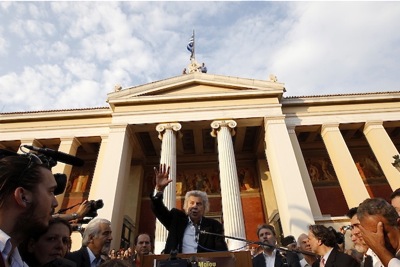
Mikis Theodorakis prendant une manifestation contre les nouvelles mesures d’ajustement structurel, devant l’Université d’Athènes.

Un complot international est en cours, visant à mener à terme la destruction de mon pays.

Les assaillants ont commencé en 1975, avec comme cible la culture grecque moderne, puis ils ont poursuivi par la dissolution de notre histoire récente et de notre identité nationale, et aujourd’hui ils essaient de nous exterminer physiquement par le chômage, la famine et la misère. Si le peuple grec ne se soulève pas pour les arrêter, le risque de disparition de la Grèce est bien réel. Je la vois arriver dans les dix prochaines années. Le seul élément qui va survivre de notre pays sera la mémoire de notre civilisation et de nos luttes pour la liberté.

Jusqu’en 2009, la situation économique de la Grèce n’avait rien de très grave. Les grandes plaies de notre économie étaient les dépenses immodérées pour l’achat du matériel de guerre et la corruption d’une partie du monde politique, financier et médiatique. Mais une part de responsabilité appartient aussi aux États étrangers, parmi eux l’Allemagne, la France, l’Angleterre et les États-Unis, qui gagnaient des milliards d’euros au dépens de notre richesse nationale par la vente annuelle de matériel de guerre. Ce saignement constant nous a écrasés et ne nous permettait plus d’aller de l’avant, alors qu’il était la source d’enrichissement d’autres pays. On peut dire la même chose pour le problème de la corruption. Par exemple, l’entreprise allemande Siemens avait une branche spéciale pour corrompre des Grecs, afin de mieux placer ses produits sur le marché national. Ainsi le peuple grec a été victime de ce duo des prédateurs allemands et grecs qui s’enrichissaient au dépens de la Grèce.

Il est évident que ces deux grandes plaies auraient pu être évitées si les dirigeants des deux parties politiques pro-américains n’avaient pas été infiltrés par la corruption. Cette richesse, produit du travail du peuple grec, était ainsi drainée vers les coffres-forts de pays étrangers. Les politiciens ont essayé de compenser cette fuite d’argent par un recours à des emprunts excessifs qui résultaient en une dette publique de 300 milliards d’euros, soit 130% du PNB (Produit National Brut).

Par cette arnaque, les étrangers gagnaient doublement : d’une part, par la vente d’armes et de leurs produits, et d’autre part, par les intérêts sur l’argent prêté au gouvernement (et non pas au peuple). Comme nous l’avons vu, le peuple grec était la principale victime dans les deux cas. Un seul exemple suffira pour vous convaincre : en 1986, Andreas Papandreou a emprunté un milliard de dollars à une banque d’un grand pays européen. Les intérêts de cet emprunt n’ont été remboursés qu’en 2010 et ils s’élevaient à 54 milliards d’euros.

L’année passée, M. Juncker a déclaré qu’il avait remarqué lui-même l’hémorragie financière massive de la Grèce qui était due aux dépenses excessives (et forcées) pour l’achat de matériel de guerre – de l’Allemagne et la France en particulier. Et il a conclu que ces vendeurs nous conduisaient à un désastre certain. Hélas, il a avoué qu’il n’a rien fait pour contrecarrer cela, afin de ne pas nuire aux intérêts des pays amis !

En 2008, la grande crise économique est arrivée en Europe. L’économie grecque n’a pas été épargnée. Cependant, le niveau de vie qui était jusque-là assez haut (la Grèce se classait parmi les 30 pays les plus riches du monde), est resté pratiquement inchangé, malgré une augmentation de la dette publique. La dette publique ne se traduit pas nécessairement par une crise économique. La dette des grands pays tels que les États-Unis et l’Allemagne sont estimées à des milliers de milliards d’euros. Les facteurs déterminants sont la croissance économique et la production. Si ces deux facteurs sont positifs, il est possible d’emprunter auprès des grandes banques à un taux d’intérêt inférieur à 5%, jusqu’à ce que la crise soit passée.

En 2009, (en novembre), au moment de l’arrivée de G. Papandréou au pouvoir, nous étions exactement dans cette position. Pour faire comprendre ce que le peuple grec pense aujourd’hui de sa politique désastreuse, je cite deux chiffres : aux élections de 2009 PASOK - le parti politique de G. Papandreou - a remporté 44% des voix. Aujourd’hui, les sondages ne lui donnent plus que 6%.

M. Papandréou aurait pu faire face à la crise économique (qui reflétait celle de l’Europe) avec des prêts de banques étrangères au taux habituel, c’est-à-dire inférieur à 5%. S’il l’avait fait, notre pays n’aurait pas eu de problème. Comme nous étions dans une phase de croissance économique, notre niveau de vie se serait amélioré.

Mais M. Papandréou avait déjà commencé sa conspiration contre le peuple grec en été 2009, lorsqu’il a rencontré secrètement M. Strauss-Kahn, dans le but de passer la Grèce sous la tutelle du FMI. Cette révélation a été divulguée par l’ancien président du FMI.

Pour y arriver, la situation économique de notre pays devait être déformée, afin que les banques étrangères aient peur et augmentent les taux d’intérêt de prêt à des montants prohibitifs. Cette opération onéreuse a commencé avec l’augmentation artificielle du déficit publique de 12% à 15% pour l’année 2009 (n.d.t : M. Andreas Georgiou, président du conseil d’administration de l’Institut National de Statistique, ELSTAT, a subitement décidé en 2009, sans demander l’accord, ni informer son conseil d’administration, de comptabiliser dans le calcul du déficit public certains organismes et entreprises publiques qui ne l’avaient jamais été auparavant dans aucun autre pays européen, excepté la Norvège. L’objectif était de faire passer le déficit de la Grèce au-dessus de celui de l’Irlande (14%), afin que ce soit elle qui joue le rôle de maillon faible de l’Europe.) Pour ce forfait, le procureur M. Pepònis a déféré M. Papandréou et M. Papakonstantinou (ministre des Finances) à la justice, il y a 20 jours.

Ensuite, M. Papandréou et le ministre des finances ont mené une campagne de discrédit pendant 5 mois, au cours de laquelle ils ont essayé de persuader les étrangers que la Grèce est, comme le Titanic, en train de couler, que les Grecs sont corrompus, paresseux et donc incapables de faire face aux besoins du pays. Après chacune de leurs déclarations, les taux d’intérêt montaient, afin que la Grèce ne puisse plus faire des emprunts et afin de donner un caractère de sauvetage à notre adhésion au FMI et à la Banque Centrale Européenne. En réalité, c’était le début de notre fin.

En mai 2010, un ministre, celui des finances, a signé le fameux Mémorandum (Mnimònio, en grec), c’est-à-dire notre soumission à nos prêteurs. D’après le Droit grec, l’adoption d’un tel accord nécessite d’être mis aux voix et d’être approuvé par les trois cinquièmes des députés. Donc, le Mémorandum et la Troïka qui nous gouvernent, fonctionnent illégalement - non seulement par rapport au Droit grec, mais aussi au Droit européen.

Depuis lors, en supposant que notre parcours vers la mort soit représenté par un escalier de 20 marches, nous avons déjà parcouru plus de la moitié du chemin. Imaginez que le Mémorandum accorde aux étrangers notre indépendance nationale et le trésor publique, à savoir : nos ports, nos aéroports, le réseau routier, l’électricité, l’eau, toute la richesse naturelle (souterraine et sous-marine) etc. Même nos monuments historiques, comme l’Acropole, Delphes, Olympie, Epidaure etc. après avoir renoncé à tous nos droits.

La production a été freinée, le taux de chômage a grimpé à 18%, 80 000 magasins ont fermé, tout comme des milliers d’usines et des centaines d’artisanats. Un total de 432 000 entreprises ont déposé leur bilan. Des dizaines de milliers de jeunes scientifiques quittent notre pays qui s’enfonce de plus en plus dans les ténèbres du Moyen Age. Des milliers de personnes qui étaient aisés jusqu’à un temps récent, sont maintenant à la recherche de nourriture dans les ordures et dorment sur le trottoir.

Entretemps, nous sommes censés vivre grâce à la générosité de nos prêteurs d’argent, les banques européennes et le FMI. En fait, l’intégralité du paquet de dizaines de milliards d’euros versé pour la Grèce, retourne à son expéditeur, tandis que nous sommes de plus en plus endettés à cause des intérêts insupportables. Et parce qu’il est nécessaire de maintenir en fonction l’État, les hôpitaux et les écoles, la Troïka charge la classe moyenne et inférieure de notre société de taxes exorbitantes qui mènent directement à la famine. La dernière fois que nous avons vécu une situation de famine généralisée dans notre pays était au début de l’occupation allemande, en 1941, avec près de 300 000 morts en six mois seulement. De nos jours, le spectre de la famine revient dans notre pays infortuné et calomnié.

Si vous pensez que l’occupation allemande nous a coûté un million de morts et la destruction complète de notre pays, comment pouvons-nous accepter, nous les Grecs, les menaces de Mme Merkel et l’intention des allemands de nous imposer un nouveau Gauleiter... mais cette fois-ci, il sera porteur d’une cravate...

La période de l’occupation allemande, de 1941 jusqu’à octobre 1944, prouve à quel point la Grèce est un pays riche, et à quel point les Grecs sont travailleurs et conscients (conscience du devoir de liberté et de l’amour pour la patrie).

Lorsque les SS et la famine tuaient un million de personnes et la Wehrmacht détruisait notre pays, confisquait toute la production agricole et l’or de nos banques, les Grecs ont pu survivre grâce à la création du Mouvement de Solidarité Nationale et d’une armée de partisans comptant 100 000 soldats, ce qui a retenu 20 divisions allemandes dans notre pays.

En même temps, non seulement les Grecs ont-ils survécu grâce à leur application au travail, mais il y a eu lieu, dans des conditions d’occupation, un grand développement de l’art grec moderne, en particulier dans le domaine de la littérature et de la musique.

La Grèce a choisi la voie du sacrifice pour la liberté et la survie en même temps.

Nous avons été attaqués, nous avons répondu avec Solidarité et Résistance et nous avons survécu. Nous faisons maintenant exactement la même chose, avec la certitude que le peuple grec sera finalement vainqueur. Ce message est envoyé à Mme Merkel et M. Schäuble, en soulignant que je reste un ami du peuple allemand et un admirateur de sa grande contribution à la science, la philosophie, l’art et la musique en particulier. La meilleure preuve de cela est le fait que j’ai confié l’intégralité de mon œuvre musicale à deux éditeurs allemands, Schott et Breitkopf, qui sont parmi les plus grands éditeurs dans le monde, et ma collaboration avec eux est très amicale.

Ils menacent de nous expulser de l’Europe. S’ils ne veulent une fois pas de nous, c’est dix fois que nous ne voulons pas faire partie de l’Europe de Merkel et Sarkozy.

Aujourd’hui, dimanche 12 février, moi et Manolis Glezos – le héros qui a arraché la croix gammée de l’Acropole, donnant ainsi le signal du début, non seulement de la résistance grecque, mais aussi de la résistance européenne contre Hitler – nous nous préparons à participer à une manifestation à Athènes. Nos rues et nos places vont être remplies de centaines de milliers de personnes qui manifesteront leur colère contre le gouvernement et la Troïka.

J’ai entendu hier le premier ministre-banquier dire, en s’adressant au peuple grec, que nous avons presque touché le fond. Mais qui nous a amené à ce point en deux ans ? Ce sont les mêmes qui, au lieu d’être en prison, menacent les députés, afin qu’ils votent pour le nouveau Mémorandum pire que le premier, qui sera appliqué par les mêmes personnes qui nous ont amenés là où nous sommes. Pourquoi ? Parce que c’est ce que le FMI et l’Eurogroup nous obligent à faire, en nous menaçant que, si nous n’obéissons pas, c’est la faillite... Ici l’on joue du théâtre de l’absurde. Les cercles qui nous haïssent (grecs et étrangers) et qui sont les seuls responsables de la situation dramatique de notre pays, nous menacent et nous font du chantage, afin de pouvoir poursuivre leur œuvre destructrice, jusqu’à notre extinction définitive.

Au cours des siècles, nous avons survécu dans des conditions très difficiles. Il est certain que, non seulement les grecs vont survivre, mais ils vont aussi revivre s’ils nous amènent de force à l’avant-dernière marche de l’escalier avant la mort.

A présent je consacre toutes mes forces à unir le peuple grec. J’essaie de le convaincre que la Troïka et le FMI ne sont pas une route à sens unique. Qu’il y a une autre solution : changer l’orientation de notre nation. Se tourner vers la Russie pour une coopération économique et la formation de partenariats qui nous aideront à mettre en valeur la richesse de notre pays en des termes favorables à notre intérêt national.

Je propose de ne plus acheter du matériel militaire des Allemands et des Français. Nous allons tout faire pour que l’Allemagne nous paie les réparations de guerre dues. Ces réparations s’élèvent, avec les intérêts, à 500 milliards d’euros.

La seule force capable de faire ces changements révolutionnaires, c’est le peuple grec uni en un Front de Résistance et de Solidarité pour que la Troïka (FMI et banques européennes) soit chassée du pays. En parallèle, il faut considérer comme nuls tous ses actes illégaux (prêts, dettes, intérêts, impôts, achats de la richesse publique). Bien sûr, leurs partenaires grecs – qui ont déjà été condamnés dans l’esprit de notre peuple en tant que traîtres – doivent être punis.

Je suis entièrement concentré sur ce but (l’Union du peuple en un Front) et je suis persuadé que nous l’atteindrons. Je me suis battu les armes à la main contre l’occupation hitlérienne. J’ai vu les cachots de la Gestapo. J’ai été condamné à mort par les Allemands et j’ai miraculeusement survécu. En 1967, j’ai fondé PAM (Patriotikò Mètopo - front patriotique), la première organisation de résistance contre la junte militaire. Je me suis battu dans la clandestinité. J’ai été arrêté et emprisonné dans « l’abattoir » de la police de la junte. Finalement, j’ai encore survécu.

Aujourd’hui, j’ai 87 ans, et il est très probable que je ne serai pas vivant le jour du sauvetage de ma patrie bien-aimée. Mais je vais mourir la conscience tranquille, parce que je continuerai jusqu’à la fin de faire mon Devoir envers les idéaux de Liberté et de Droit.


Mikis Theodorakis

jueves, 1 de marzo de 2012

Lo que se esconde detrás del Ejército Libre Sirio

01 de marzo 2012 | 13:45


Cuando hablamos de la oposición siria, la primera imagen que nos viene a la cabeza es el Consejo Nacional Sirio. En este artículo no voy a hablar de este consejo creado por Qatar, Arabia Saudí, Turquía y Occidente, sino de su brazo militar, el llamado Ejército Libre Sirio.

Mientras que los medios occidentales y las cadenas árabes Al Jazeera y Al Arabiya, propiedad de Qatar y Arabia Saudí, respectivamente, informaron desde el principio que la revuelta del mencionado grupo armado estaba formándose con soldados desertores del Ejército regular sirio, la realidad es muy distinta.

Un año después de los primeros disturbios en Siria, el Ejército Libre Sirio se compone de unos cuantos desertores, un nutrido grupo de hermanos musulmanes nativos cegados por la llamada a la guerra santa hecha por algunos imanes saudíes y ratificada por Al Qaeda y, sobre todo, por mercenarios yihadistas y salafistas extranjeros reclutados por Al Qaeda y pagados por Qatar y Arabia Saudí, como ocurrió en Libia.

Se da la paradoja de que Al Qaeda vuelve a estar bajo la dirección de la CIA, que creó este ejército paramilitar transnacional y fundamentalista para luchar contra los soviéticos en Afganistán en el siglo pasado.


El gran campo de entrenamiento y avituallamiento se encuentra esta vez en Turquía, donde los servicios de inteligencia estadounidenses han desplegado toda su logística. Allí, comandos británicos y franceses y 'empresas de seguridad' estadounidenses entrenan a los mercenarios yihadistas en las técnicas de guerra más avanzadas y les suministran las armas israelíes más sofisticadas. Toda esta 'megaoperación fantasma' es financiada con los petrodólares saudíes y qataríes.

Una vez adiestrados y equipados de armamento de todo tipo, son introducidos por remesas en Siria a través de la frontera turca, y se unen a los grupúsculos armados nativos a los que a su vez adiestran y traspasan las órdenes de la CIA que han recibido en Turquía. A continuación, se ejecutan dichas órdenes y se ponen en práctica las técnicas aprendidas, sembrando el terror entre la población siria.

Entre las técnicas de terror que utilizan cabe mencionar la destrucción de todo tipo de infraestructuras para provocar el desabastecimiento de la población, como el incendio de diversos oleoductos. También bombardean e incendian edificios públicos de todo tipo, incluyendo colegios, y utilizan las amenazas de muerte a través de SMS a gran parte de la población, cuyos números de teléfono son localizados a través de las técnicas más sofisticadas de telecomunicaciones.


Los asesinatos selectivos de talentos y profesionales de prestigio del país es otra de las técnicas de terror utilizadas. Pretenden dejar al país huérfano de líderes de opinión y sumir a la población en el miedo. Otra forma de aterrorizar al pueblo es la grabación de miembros del Ejército y los cuerpos de seguridad hechos prisioneros, a los que decapitan al modo islamista con grabación incluida.

Hay que mencionar también el secuestro de miembros de las minorías alauitas, por el hecho de pertenecer a la minoría a la que pertenece el presidente.

Recientemente, muchos medios e instituciones occidentales y árabes se han rendido a la evidencia y han empezado a informar sobre la realidad de este grupo armado. Entre ellos cabe destacar a Stratford Global Intelligence, The International Institute for Strategic Studies (IISS) y la agencia Reuters.

Sin embargo, la mayoría de medios occidentales siguen 'informando' de que "manifestantes demócratas y desarmados son asesinados por los tanques de Al Assad, que reprime y asesina a su población día tras día", ahora con "el apoyo de Rusia y China".

Algún día, la opinión pública occidental descubrirá la verdad sobre Siria y pedirá una explicación a sus gobernantes, pero el desastre ya será irreversible.

martes, 28 de febrero de 2012

Los asistentes a Bilderberg 2011

La lista oficial confirmada de los asistentes a la reunión de 2011 en Canada.

En color, gente interesante de saber que son Bilderberg. Con esto que cada uno saque sus conclusiones. 

Belgium


Coene, Luc, Governor, National Bank of Belgium
Davignon, Etienne, Minister of State
Leysen, Thomas, Chairman, Umicore

China


Fu, Ying, Vice Minister of Foreign Affairs
Huang, Yiping, Professor of Economics, China Center for Economic Research, Peking University

Denmark


Eldrup, Anders, CEO, DONG Energy
Federspiel, Ulrik, Vice President, Global Affairs, Haldor Topsøe A/S
Schütze, Peter, Member of the Executive Management, Nordea Bank AB

Germany


Ackermann, Josef, Chairman of the Management Board and the Group Executive Committee, Deutsche Bank
Enders, Thomas, CEO, Airbus SAS
Löscher, Peter, President and CEO, Siemens AG
Nass, Matthias, Chief International Correspondent, Die Zeit
Steinbrück, Peer, Member of the Bundestag; Former Minister of Finance

Finland


Apunen, Matti, Director, Finnish Business and Policy Forum EVA
Johansson, Ole, Chairman, Confederation of the Finnish Industries EK
Ollila, Jorma, Chairman, Royal Dutch Shell
Pentikäinen, Mikael, Publisher and Senior Editor-in-Chief, Helsingin Sanomat

France


Baverez, Nicolas, Partner, Gibson, Dunn & Crutcher LLP
Bazire, Nicolas, Managing Director, Groupe Arnault /LVMH
Castries, Henri de, Chairman and CEO, AXA
Lévy, Maurice, Chairman and CEO, Publicis Groupe S.A.
Montbrial, Thierry de, President, French Institute for International Relations
Roy, Olivier, Professor of Social and Political Theory, European University Institute

Great Britain


Agius, Marcus, Chairman, Barclays PLC
Flint, Douglas J., Group Chairman, HSBC Holdings
Kerr, John, Member, House of Lords; Deputy Chairman, Royal Dutch Shell
Lambert, Richard, Independent Non-Executive Director, Ernst & Young
Mandelson, Peter, Member, House of Lords; Chairman, Global Counsel
Micklethwait, John, Editor-in-Chief, The Economist
Osborne, George, Chancellor of the Exchequer
Stewart, Rory, Member of Parliament
Taylor, J. Martin, Chairman, Syngenta International AG

Greece


David, George A., Chairman, Coca-Cola H.B.C. S.A.
Hardouvelis, Gikas A., Chief Economist and Head of Research, Eurobank EFG
Papaconstantinou, George, Minister of Finance
Tsoukalis, Loukas, President, ELIAMEP Grisons

International Organizations


Almunia, Joaquín, Vice President, European Commission
Daele, Frans van, Chief of Staff to the President of the European Council
Kroes, Neelie, Vice President, European Commission; Commissioner for Digital Agenda
Lamy, Pascal, Director General, World Trade Organization
Rompuy, Herman van, President, European Council
Sheeran, Josette, Executive Director, United Nations World Food Programme
Solana Madariaga, Javier, President, ESADEgeo Center for Global Economy and Geopolitics
Trichet, Jean-Claude, President, European Central Bank
Zoellick, Robert B., President, The World Bank Group

Ireland


Gallagher, Paul, Senior Counsel; Former Attorney General
McDowell, Michael, Senior Counsel, Law Library; Former Deputy Prime Minister
Sutherland, Peter D., Chairman, Goldman Sachs International

Italy


Bernabè, Franco, CEO, Telecom Italia SpA
Elkann, John, Chairman, Fiat S.p.A.
Monti, Mario, President, Univers Commerciale Luigi Bocconi
Scaroni, Paolo, CEO, Eni S.p.A.
Tremonti, Giulio, Minister of Economy and Finance


The Suvretta House Hotel: venue of the 2011 Bilderberg group conference


Canada


Carney, Mark J., Governor, Bank of Canada
Clark, Edmund, President and CEO, TD Bank Financial Group
McKenna, Frank, Deputy Chair, TD Bank Financial Group
Orbinksi, James, Professor of Medicine and Political Science, University of Toronto
Prichard, J. Robert S., Chair, Torys LLP
Reisman, Heather, Chair and CEO, Indigo Books & Music Inc. Center, Brookings Institution

Netherlands


Bolland, Marc J., Chief Executive, Marks and Spencer Group plc
Chavannes, Marc E., Political Columnist, NRC Handelsblad; Professor of Journalism
Halberstadt, Victor, Professor of Economics, Leiden University; Former Honorary Secretary General of Bilderberg Meetings
H.M. the Queen of the Netherlands
Rosenthal, Uri, Minister of Foreign Affairs
Winter, Jaap W., Partner, De Brauw Blackstone Westbroek

Norway


Myklebust, Egil, Former Chairman of the Board of Directors SAS, sk Hydro ASA
H.R.H. Crown Prince Haakon of Norway
Ottersen, Ole Petter, Rector, University of Oslo
Solberg, Erna, Leader of the Conservative Party

Austria


Bronner, Oscar, CEO and Publisher, Standard Medien AG
Faymann, Werner, Federal Chancellor
Rothensteiner, Walter, Chairman of the Board, Raiffeisen Zentralbank Österreich AG
Scholten, Rudolf, Member of the Board of Executive Directors, Oesterreichische Kontrollbank AG

Portugal


Balsemão, Francisco Pinto, Chairman and CEO, IMPRESA, S.G.P.S.; Former Prime Minister
Ferreira Alves, Clara, CEO, Claref LDA; writer
Nogueira Leite, António, Member of the Board, José de Mello Investimentos, SGPS, SA

Sweden


Mordashov, Alexey A., CEO, Severstal
Bildt, Carl, Minister of Foreign Affairs
Björling, Ewa, Minister for Trade
Wallenberg, Jacob, Chairman, Investor AB

Switzerland


Brabeck-Letmathe, Peter, Chairman, Nestlé S.A.
Groth, Hans, Senior Director, Healthcare Policy & Market Access, Oncology Business Unit, Pfizer Europe
Janom Steiner, Barbara, Head of the Department of Justice, Security and Health, Canton
Kudelski, André, Chairman and CEO, Kudelski Group SA
Leuthard, Doris, Federal Councillor
Schmid, Martin, President, Government of the Canton Grisons
Schweiger, Rolf, Ständerat
Soiron, Rolf, Chairman of the Board, Holcim Ltd., Lonza Ltd.
Vasella, Daniel L., Chairman, Novartis AG
Witmer, Jürg, Chairman, Givaudan SA and Clariant AG

Spain


Cebrián, Juan Luis, CEO, PRISA
Cospedal, María Dolores de, Secretary General, Partido Popular
León Gross, Bernardino, Secretary General of the Spanish Presidency
Nin Génova, Juan María, President and CEO, La Caixa
H.M. Queen Sofia of Spain

Turkey


Ciliv, Süreyya, CEO, Turkcell Iletisim Hizmetleri A.S.
Gülek Domac, Tayyibe, Former Minister of State
Koç, Mustafa V., Chairman, Koç Holding A.S.
Pekin, Sefika, Founding Partner, Pekin & Bayar Law Firm

USA


Alexander, Keith B., Commander, USCYBERCOM; Director, National Security Agency
Altman, Roger C., Chairman, Evercore Partners Inc.
Bezos, Jeff, Founder and CEO, Amazon.com
Collins, Timothy C., CEO, Ripplewood Holdings, LLC
Feldstein, Martin S., George F. Baker Professor of Economics, Harvard University
Hoffman, Reid, Co-founder and Executive Chairman, LinkedIn
Hughes, Chris R., Co-founder, Facebook
Jacobs, Kenneth M., Chairman & CEO, Lazard
Johnson, James A., Vice Chairman, Perseus, LLC
Jordan, Jr., Vernon E., Senior Managing Director, Lazard Frères & Co. LLC
Keane, John M., Senior Partner, SCP Partners; General, US Army, Retired
Kissinger, Henry A., Chairman, Kissinger Associates, Inc.
Kleinfeld, Klaus, Chairman and CEO, Alcoa
Kravis, Henry R., Co-Chairman and co-CEO, Kohlberg Kravis, Roberts & Co.
Kravis, Marie-Josée, Senior Fellow, Hudson Institute, Inc.
Li, Cheng, Senior Fellow and Director of Research, John L. Thornton China Center, Brookings Institution
Mundie, Craig J., Chief Research and Strategy Officer, Microsoft Corporation
Orszag, Peter R., Vice Chairman, Citigroup Global Markets, Inc.
Perle, Richard N., Resident Fellow, American Enterprise Institute for Public Policy Research
Rockefeller, David, Former Chairman, Chase Manhattan Bank
Rose, Charlie, Executive Editor and Anchor, Charlie Rose
Rubin, Robert E., Co-Chairman, Council on Foreign Relations; Former Secretary of the Treasury
Schmidt, Eric, Executive Chairman, Google Inc.
Steinberg, James B., Deputy Secretary of State
Thiel, Peter A., President, Clarium Capital Management, LLC
Varney, Christine A., Assistant Attorney General for Antitrust
Vaupel, James W., Founding Director, Max Planck Institute for Demographic Research
Warsh, Kevin, Former Governor, Federal Reserve Board
Wolfensohn, James D., Chairman, Wolfensohn & Company, LLC

Not on the official list, but also confirmed:


Rasmussen, Anders Fogh, Secretary General of NATO ,DEN
Merkel, Angela Dorothea, German Chancellor ,GER
Zapatero, Jose Luis, Spanish Prim Minister ,SPA

Gates, Bill, Former Microsoft CEO, Head of the Gates Foundation ,USA
Gates, Robert, US Secretary of Defense ,USA